
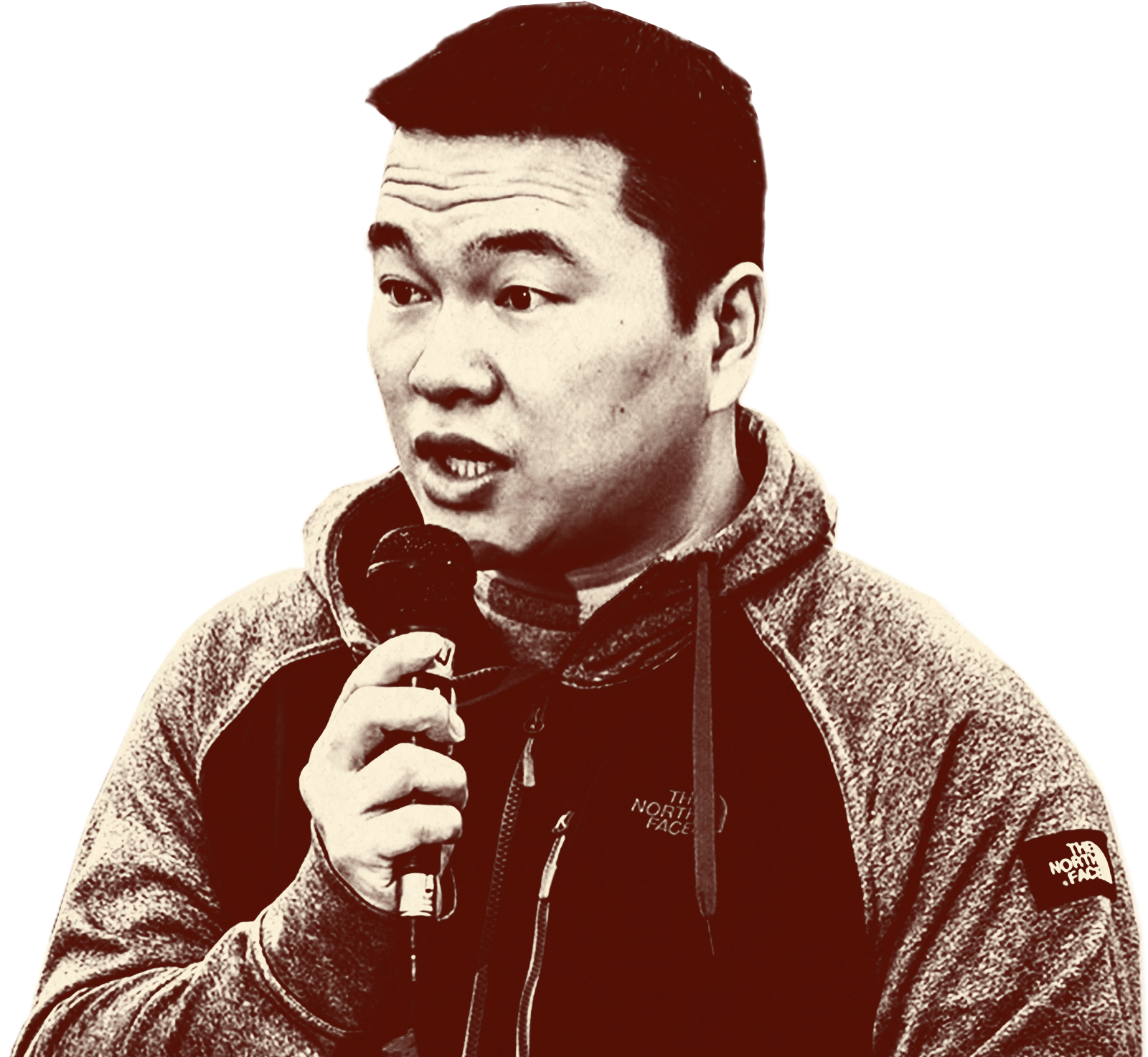
xu
LIN
Community Historian
Photos courtesy of Joe Piette

The following interview was recorded on Wednesday, May 13th, 2026. It was conducted as part of a course, WRIT 290, by Drexel student interviewers Andrew Chea and Katerina Gutierrez and Community Student Karen Scott. Additional context and organization was suggested by Amy Lan and Tim Lao. Copy editing was completed for sense order and clarity. Images were added for online reading ease.
Who is Xu Lin? What is your personal history and how did it contribute to your activism in Philadelphia?
So before coming to America–in China, I wasn't very physically active. As a kid, I wanted to play basketball all the time, ping pong, all kinds of sports. I was quote/unquote “a good student”... [so] that was not encouraged, and sometimes even punished. Kids are so different. How and why would you want to teach kids one way? It just doesn't work.
I had a lot of hopes for my new journey in this country.
I came here (to America) when I was sixteen. My Dad found me a job at a Chinese takeout restaurant. I worked roughly 70 hours a week. I thought to myself, “People are working way too much.” It was stressful, I thought going to school was my way out. It turned out to be a real struggle.
My experiences in high school are when things got bad. I went to Furness High School in South Philly. I got into three fights in my first week of school. My first two years of high school, I was fighting nonstop because the school wasn't doing anything to help. I seriously thought about bringing a weapon to school and I was like, “I'm going to teach them a lesson with my life.”
Going to school was going to hell. I remember sometimes I would go to the bathroom and look at myself and hit my face. To be tough. To prepare to go to school. At seven in the morning. In order to survive we just had to take it into our own hands and a lot of my friends quit in the process. I saw nearly half of my friends drop out including my sister. She made it to her senior year, and she just couldn't take it anymore. It was hard because she never shared that she was struggling. My brother and I made it through high school, but after high school, my brother never thought about going to college because the four years of high school were just so painful.
I [eventually] met my mentor from AAU through community work. She took us on trips to visit different grassroots organizations in this country. We went to the South, El Paso, San Carlos, and the West Coast. We went to Detroit and met with a community organizer who tried to organize Black residents who tried to protect their properties.
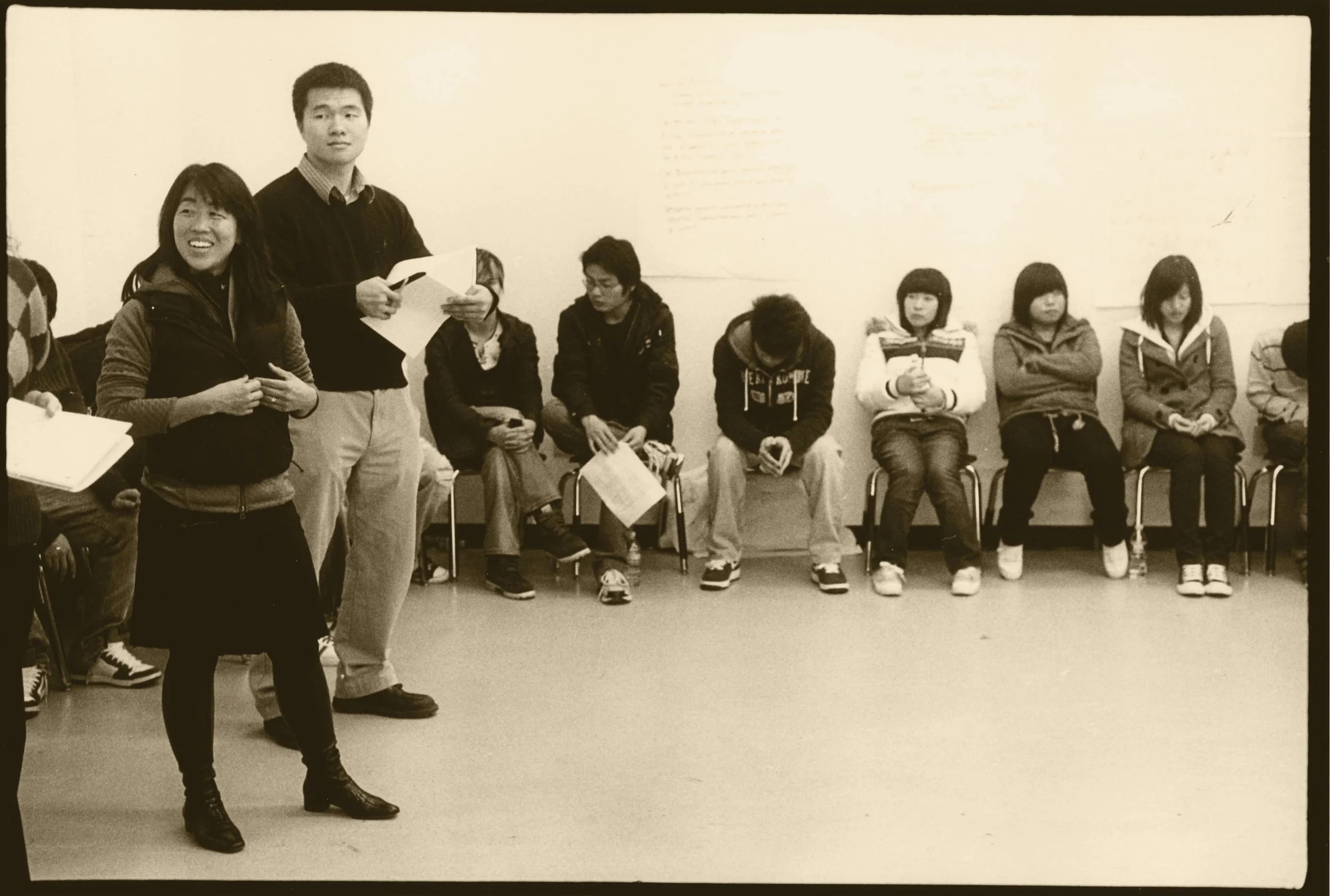
Photo courtesy of Harvey Finkle
You’ve done so much. Could you tell us about working through the period of violence at South Philly High?
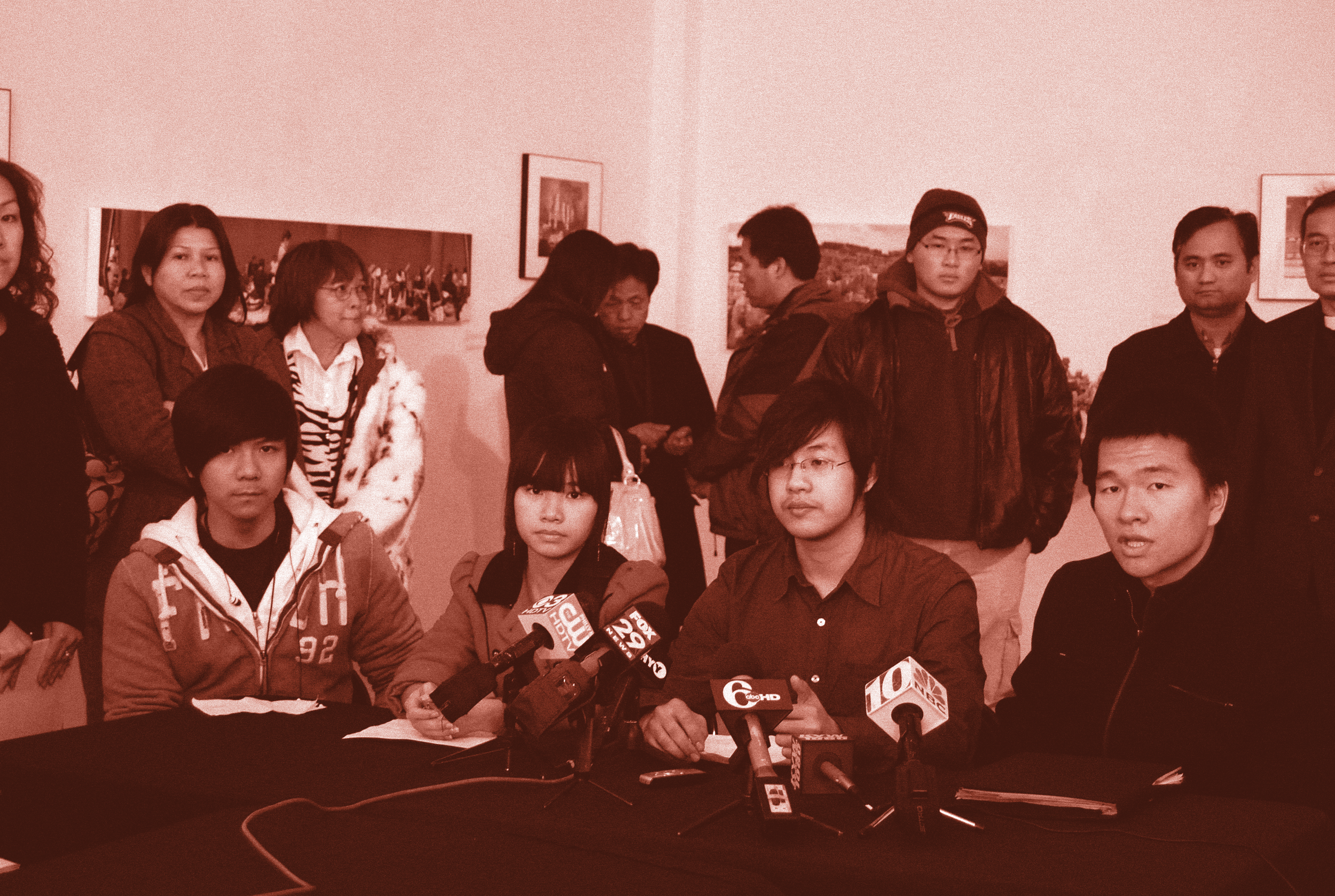
I was working with PCDC when the South Philly High incidents happened [in 2009]. The anti-immigrant, anti-Asian violence was really intense, we reported incidents to the school. The attitude of the school was, boys will be boys–which normalized violence against Asian and immigrant students.
On December 3rd, 2009, more than thirty Asian students were attacked within one day. The first attack took place at seven in the morning, and the last one was after school. The violence against Asians happened throughout the whole day and the school did nothing to help them. The students didn't want to go back to school. So, community organizations like AAU and PCDC enlisted my involvement. The students started boycotting the school. They said the school wasn't safe. We had a [community] meeting in Chinatown.
People from the school said, "You should go back to school.” And the students said to the head of security, “Some of us were assaulted in front of you. What did you do? What are you going to do to ensure our safety?” He couldn't answer.
At the time, the school principal, superintendent and mayor were African American. Mayor Nutter, without talking to any of the victims, made the statement, “I fully support the school and the School District of Philadelphia.” Their strategy was to say it was the Asian students against the Black students.
And we rejected that.
That's the first time I started asking questions. This is the most powerful, most resourceful country in the world. How come there are so many homeless people on the street? How come people complain they can't afford health care? I just started having a lot more questions. I wanted to get answers, and that's when I got more involved with community organizing which I felt would be the only way to change things.
I was a community organizer for ten years. I've worked with PCDC (the Philadelphia Chinatown Development Corporation) and Asian Americans United (AAU). Now I'm on the board of a charter school, [The Folk Arts Cultural Treasures School], and I am also a small business owner with my family and friends.

“When people don't see each other as human beings directly, we are very easily influenced by how the powerful want us to see each other.”
Photo courtesy of Kathy Shimizu
Around that time, you had a role in the Dragon Boats. What do you think they mean to the community?
I got involved in 2009 for the first time with the Philadelphia Chinatown Dragon Boat Team. Dragon Boat is tied into the Duanwu Festival going on in China for thousands of years. When people feel… their culture and their identities are being celebrated, people are really excited. So my Dad's generation got really, really involved and I think for me that was an interesting thing. I've never seen people of their generation doing a sport. It was beautiful.
We would train really, really hard, because our generation–most of us don't know how to swim because our fathers were gone. They came here and nobody was teaching us. I was separated from my Dad [when I was eight] for about eight years before we saw each other again. When my Dad and I looked at each other, we were like, “Oh, I don't know this person anymore.” But through dragon boating he taught me how to paddle, the techniques, the rhythm, and how to listen to the drumming.
After a few years, I think in 2012, the captain at the time retired. The former captain said, “I want you to take over and be the captain of the team.” And I was like–are you kidding me? He said, “I will support you, but if you do not become the captain there will be no team.” So, I was kind of forced into the role, but I was already bringing people into the team.
The team used to be all men. I started bringing my partner Teresa, some of my friends, and a lot of young people I was working with from AAU. That shifted the culture of the team. The membership started growing more diverse. Not only were there women on the team, but also people from different races, people from different walks of life, and I think now there's a lot of people on the team who are educators, artists, and even professionals. I feel like my biggest contribution was making the team diverse. We used to compete on the Schuylkill River with the US Navy and US Army teams. They were really competitive, And we beat them every year with no exception.
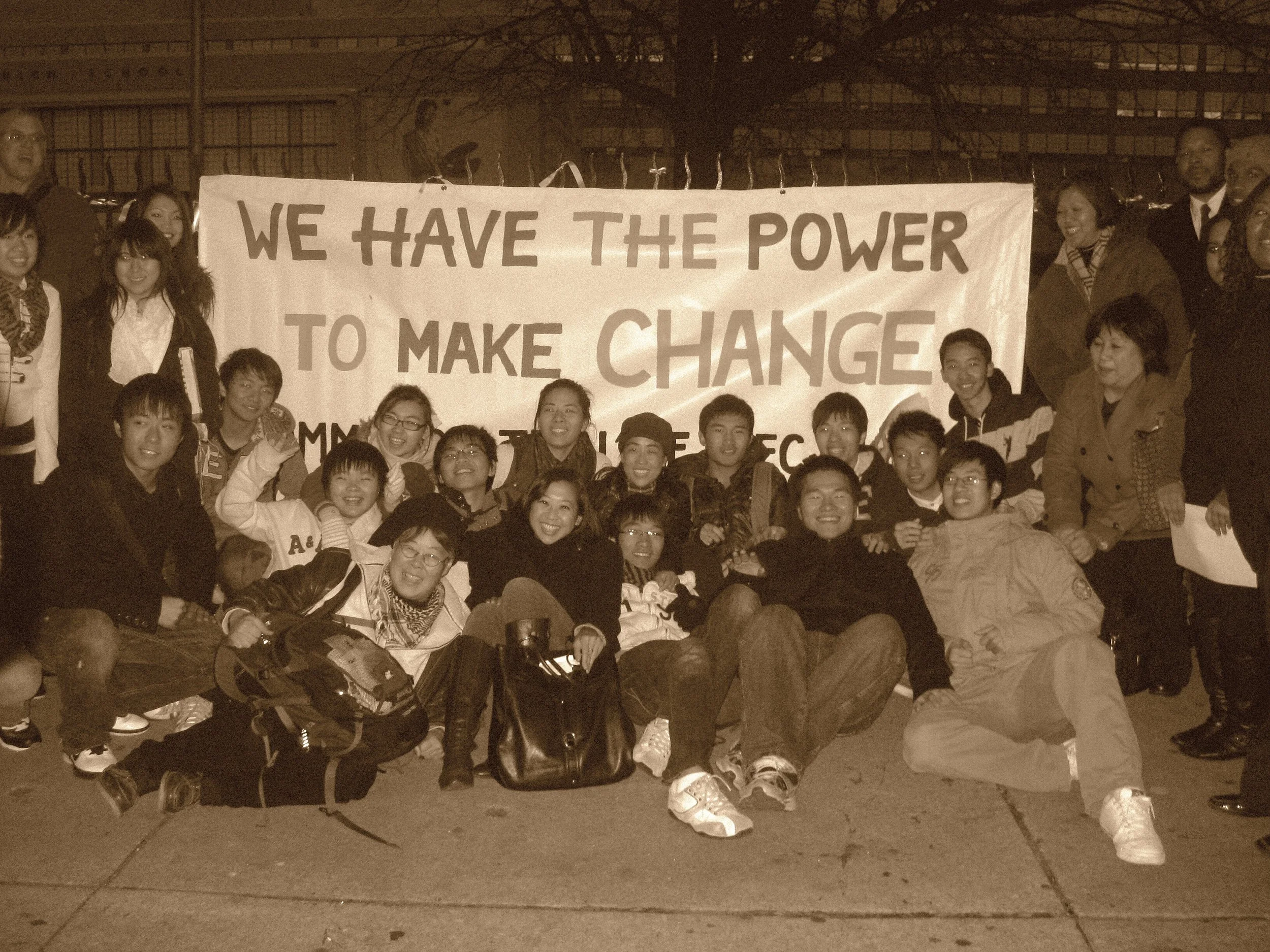
Photo courtesy of Wei Chen
You also participated in protesting the Philadelphia Foxwoods Casino in 2008-2009. Can you talk about that?
My involvement was limited for [a few] different reasons. I wasn't yet working at AAU–the leading force. My organization was slow, but eventually they wanted to fight against the casino. We started organizing tenants I had worked with, and we had a lot of people going to Harrisburg to attend a meeting to voice our opposition. There was a meeting at the Holy Redeemer Church in Chinatown on Vine Street. Frank DiCicco was our councilperson at the time, and he was supporting the casino. And I remember, there were people hissing at him every time he spoke. He was really uncomfortable. I didn't know what to think, but later I realized making powerful people uncomfortable is one of the most effective ways to make changes.
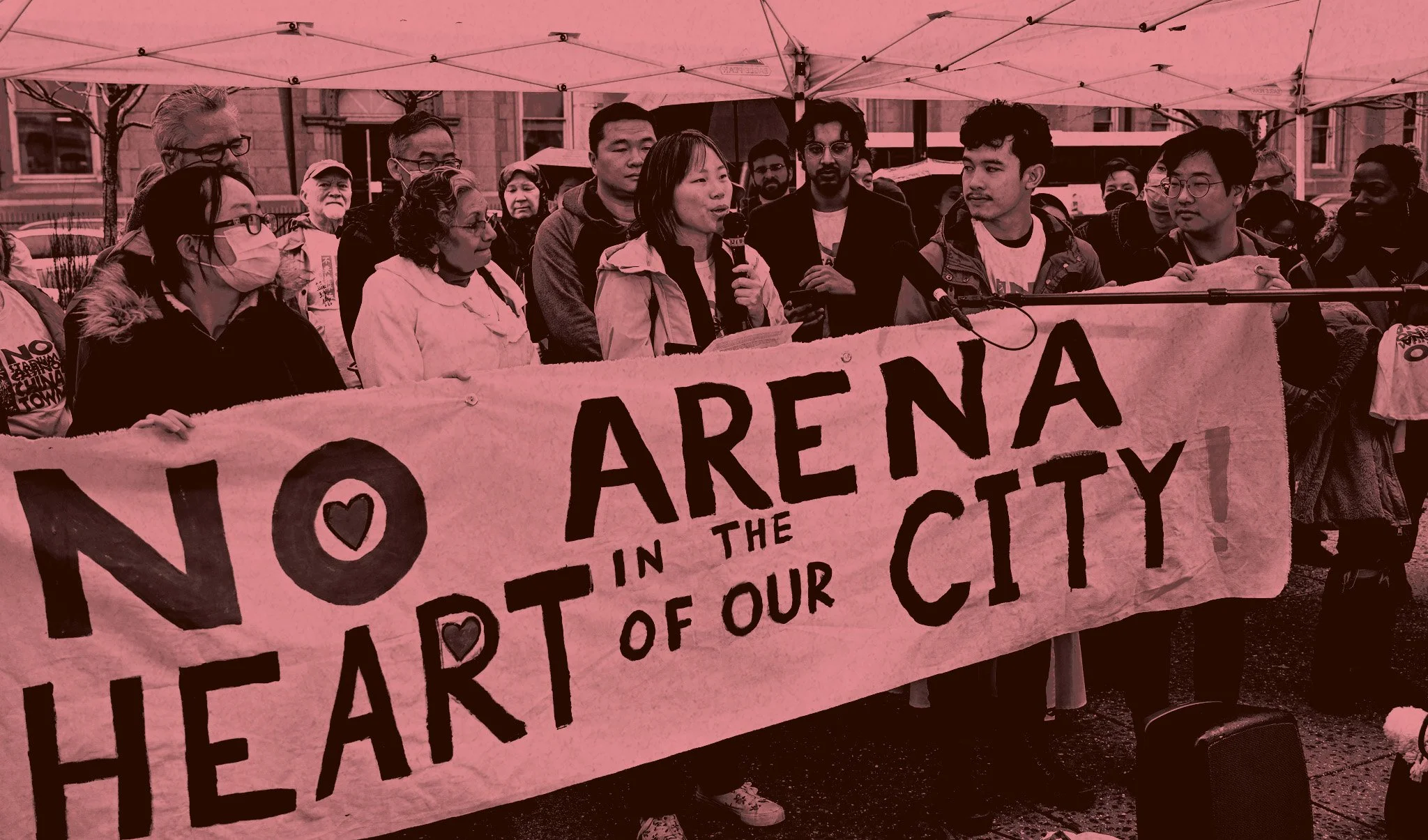
What was your role in the recent fight against the basketball arena–the No Arena movement?
So for Chinatown–every few years, the government and developers would try to push a project that our communities didn't want. With the proposed basketball arena we have never faced opponents who are so powerful with money that could buy the whole city. Some of them are involved with an international company called Blackstone. They are known to destroy communities globally: in Europe, Africa, and America. Chinatown is the last majority-minority neighborhood in Center City. They wanted the land. When I heard the news, I was really concerned. I was really frustrated… like, “Oh, here we go again.” You know–the highway, the stadium, the casinos, and now the arena. But then, some AAU folks called for a meeting. It was relatively small, but at the meeting I saw some familiar faces, people who were involved with all the other campaigns to save Chinatown. I was like, “Okay, all the OGs are here. You know, I feel better and safer.”
If you allow that kind of environment to take place, it's the [fault of the] school's leadership not the students. We proved that point. We worked with different language speaking groups separately, and every month we would bring them together with the English-speaking students. The English-speaking students [started by] being impatient in the room, because every conversation was interpreted in three languages. But it only took two meetings for the English-speaking students to [begin] advocating for the immigrant students. When their peers spoke, they said, “You need to slow down for interpretation.” And the students started shaking hands, even hugging each other.
We took the case to a few different levels: the school, the school district, the Philadelphia Human Relations Commission as well — which had no teeth — and the Department of Justice. After months of investigation, they found merit in our complaints, and they forced the school district to change their policy to protect all students, based on their nationality, sexual orientation, race, and gender. I think that was a win for the city and all the students in the school system.
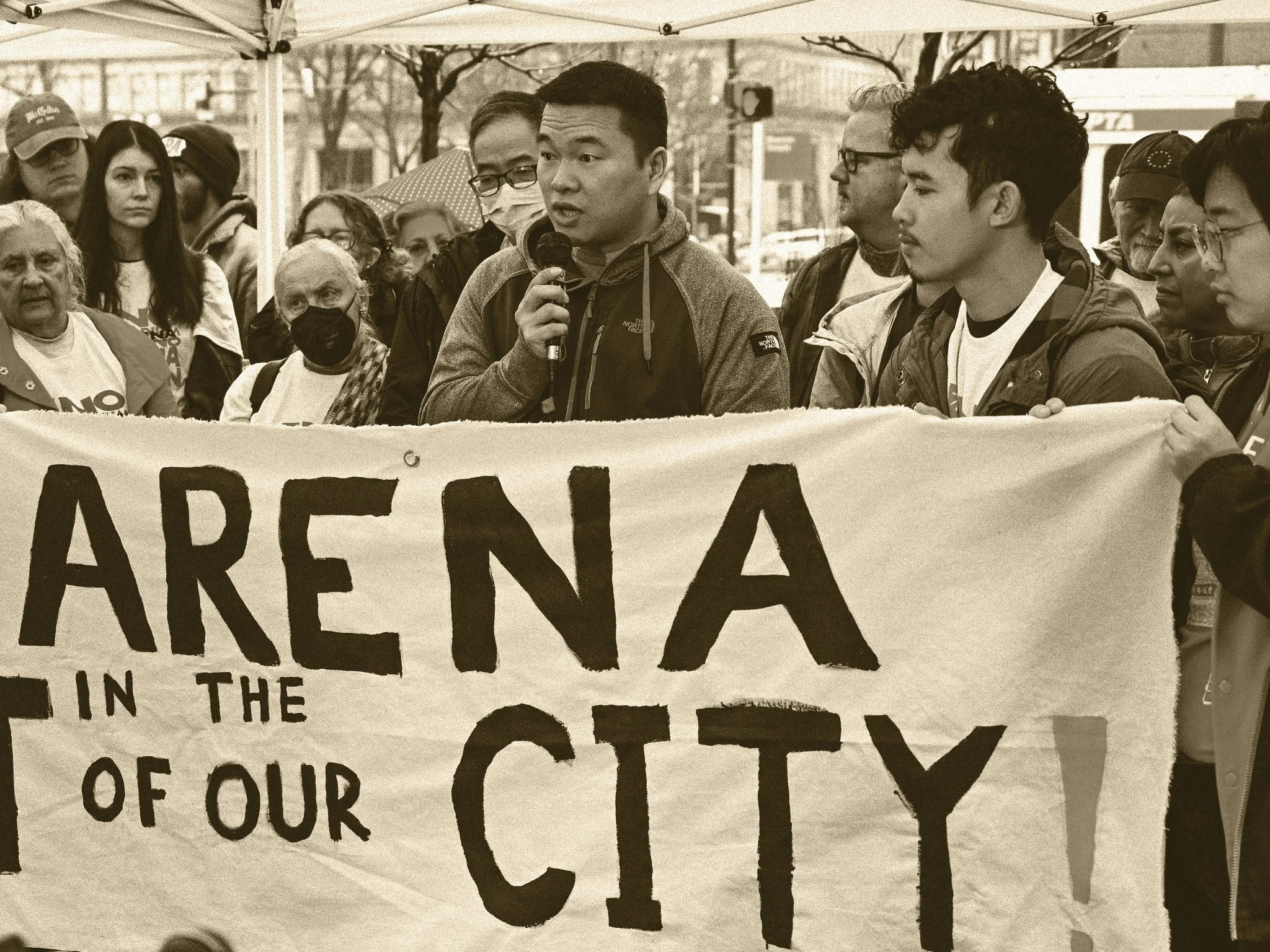
Photo courtesy of Joe Piette
Are you becoming someone the youth these days would call an OG? How are you feeling about that… as you've continued doing this work for a while?
Yes. I think it's a new thing for me to realize that. I don't feel like I'm that experienced. But I also realized it's important for the younger generation to learn what I have learned. I think what's beautiful about this campaign is, there is this collaboration from different generations. I think we would not be able to work, to have this campaign on this level, if not for all the intergenerational work. I think for the older generation, my elders–people like Debbie Wei, Ellen Samukawa, Helen Gym, Mary Yi, Neeta Patel, not only do they have the experience from decades of work and organizing, but also the relationships they built over the years. I think that was really important.

“I think there's
a lot of connection
in history where Asian and Black communities work together,
but we don't teach
that in school.”
Photo courtesy of Kathy Shimizu
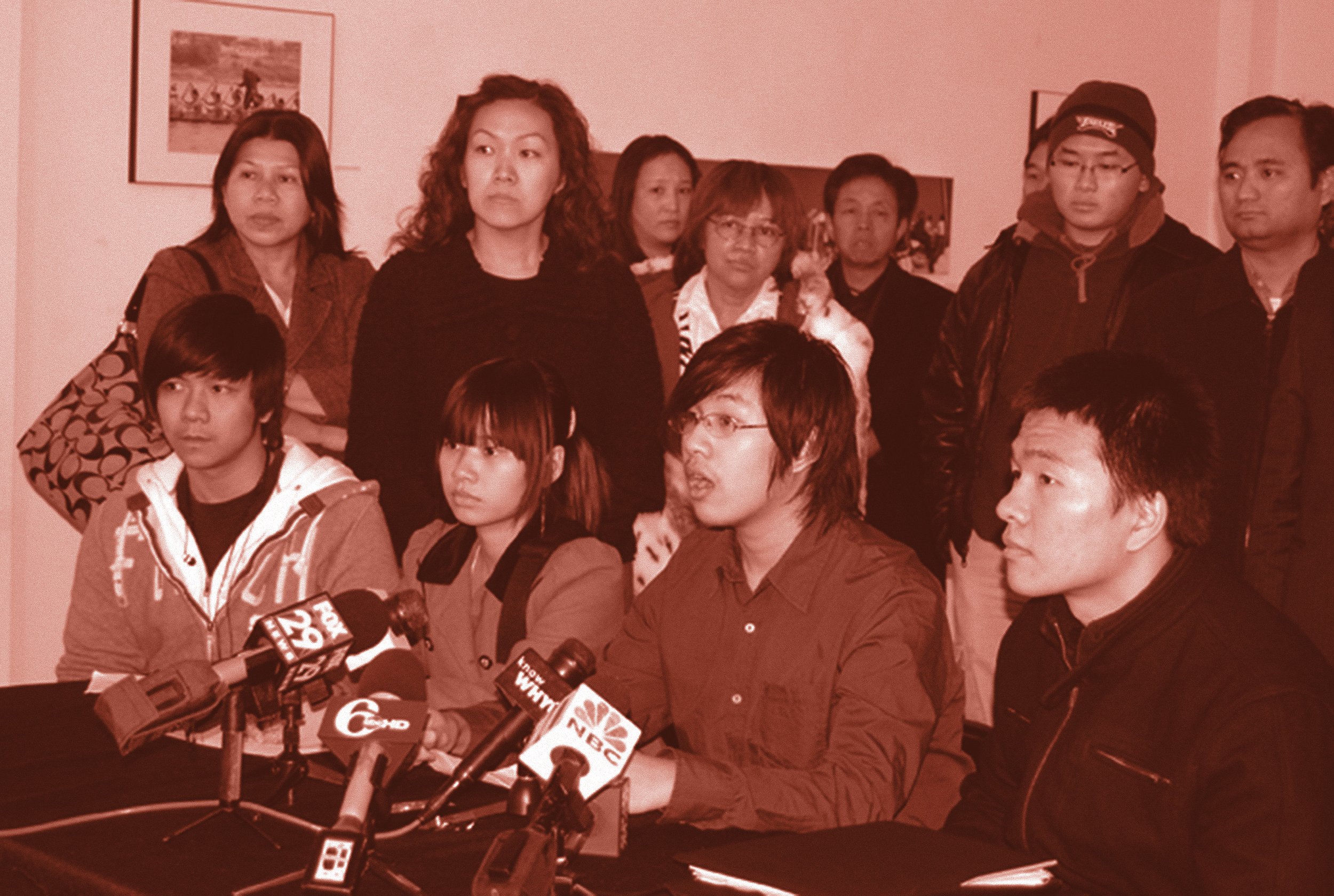
Turning back to activism in your neighborhood–how do you think other communities could help Chinatown?
I feel like the Black community is already doing so much… for the Asian community and all communities. So–I went to Furness High School, and for the first time I had free lunch. When I got involved with organizing, I learned that the first community who started the free lunch program was the Black Panthers. You know, so I feel like there is a historic connection. Bahia said to me, “You know, in this society, people of color often see each other through the white ruling class lens.” So, there's a lot of bias and a lot of blaming. When people don't see each other as human beings directly, we are very easily influenced by how the powerful want us to see each other.
I think there's a lot of connection in history where Asian and Black communities work together, but we don't teach that in school. We have to educate our own communities and to continue to work with and support each other. I think after the casino fight, a group of Black residents came to AAU and said, “Temple University wants to build a stadium in our community. Can you help us?” I think that kind of mutual help is just amazing, necessary, and beautiful.
