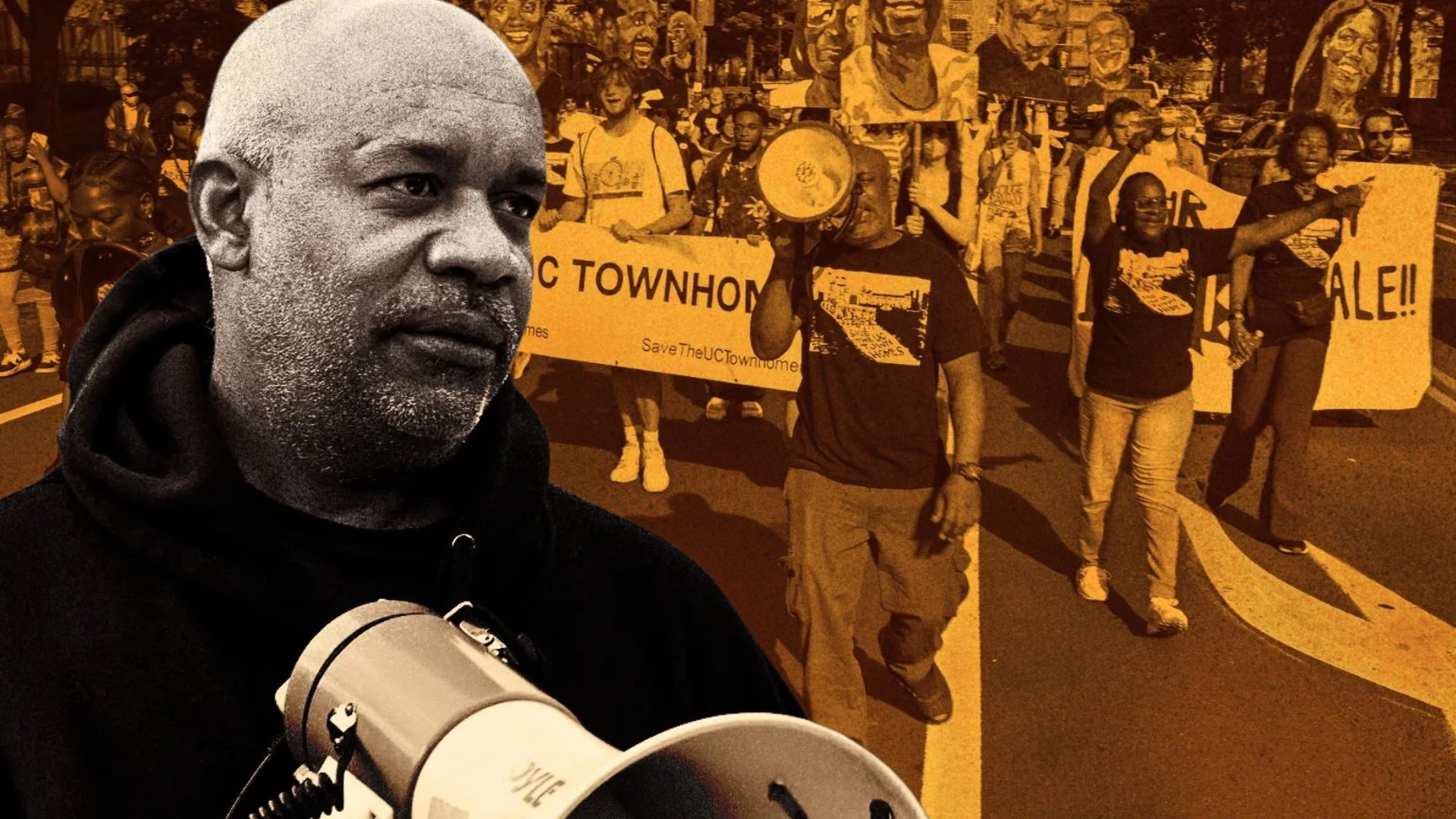
sheldoN
davids
Community Historian
All photographs by Joe Piette unless otherwise noted.
The following interview was recorded on May 12, 2026. It was conducted as part of a course, WRIT 290, by Drexel student interviewers Teagan Hardiman, Shay McNaughton, and Vidhin Shah. Seven Finckel was present as a photographer and witness. This transcript was finalized on June 3, 2026. Additional context was suggested by Halyne Tran, Jackson Tignor, and Tim Lao. Minor copy editing was completed, images and headings were added for online reading ease.
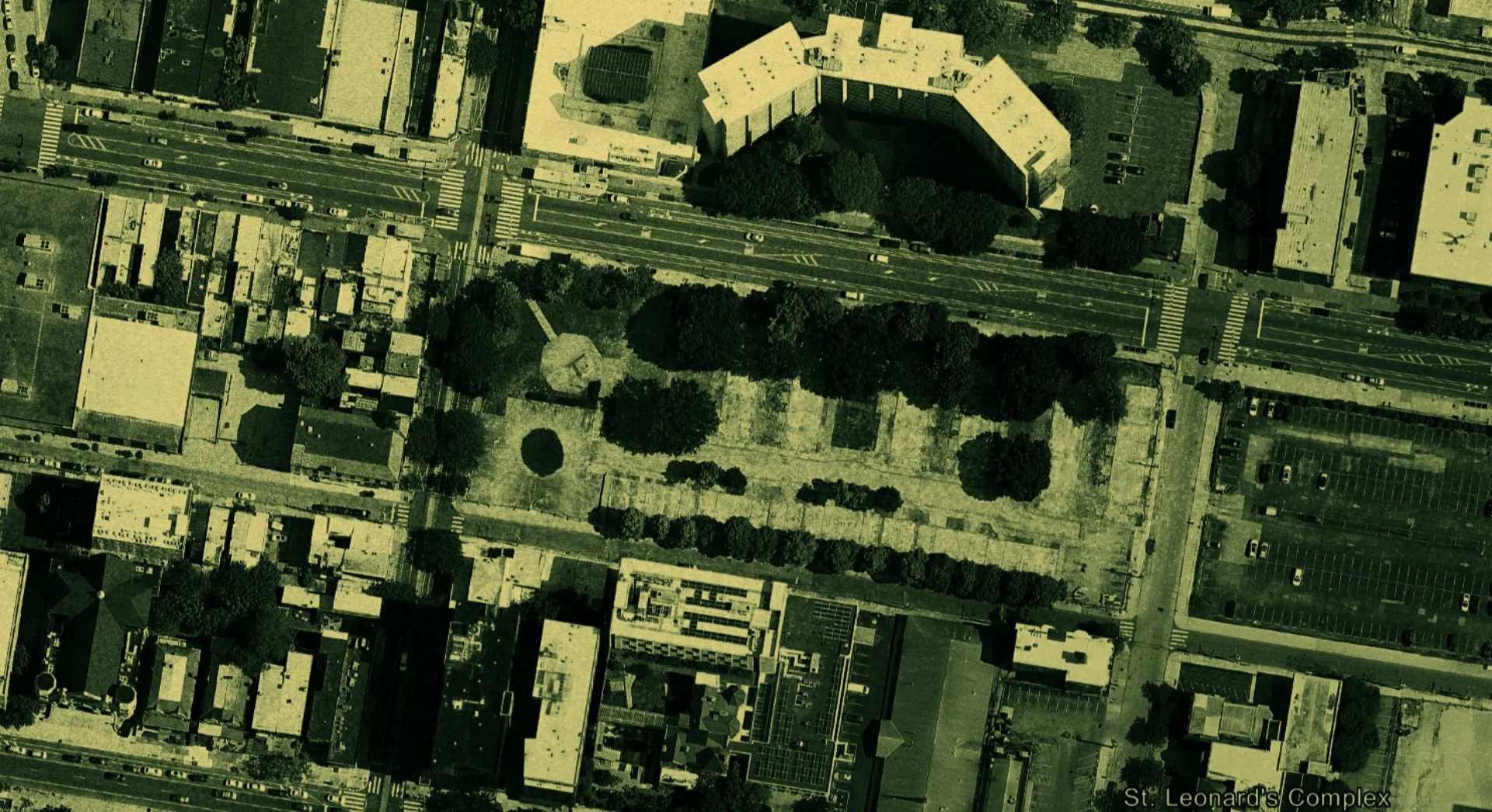
University City Townhomes aerial 2023 demolished - accessed by Jackson Tignor, July 2026.
CONTEXT
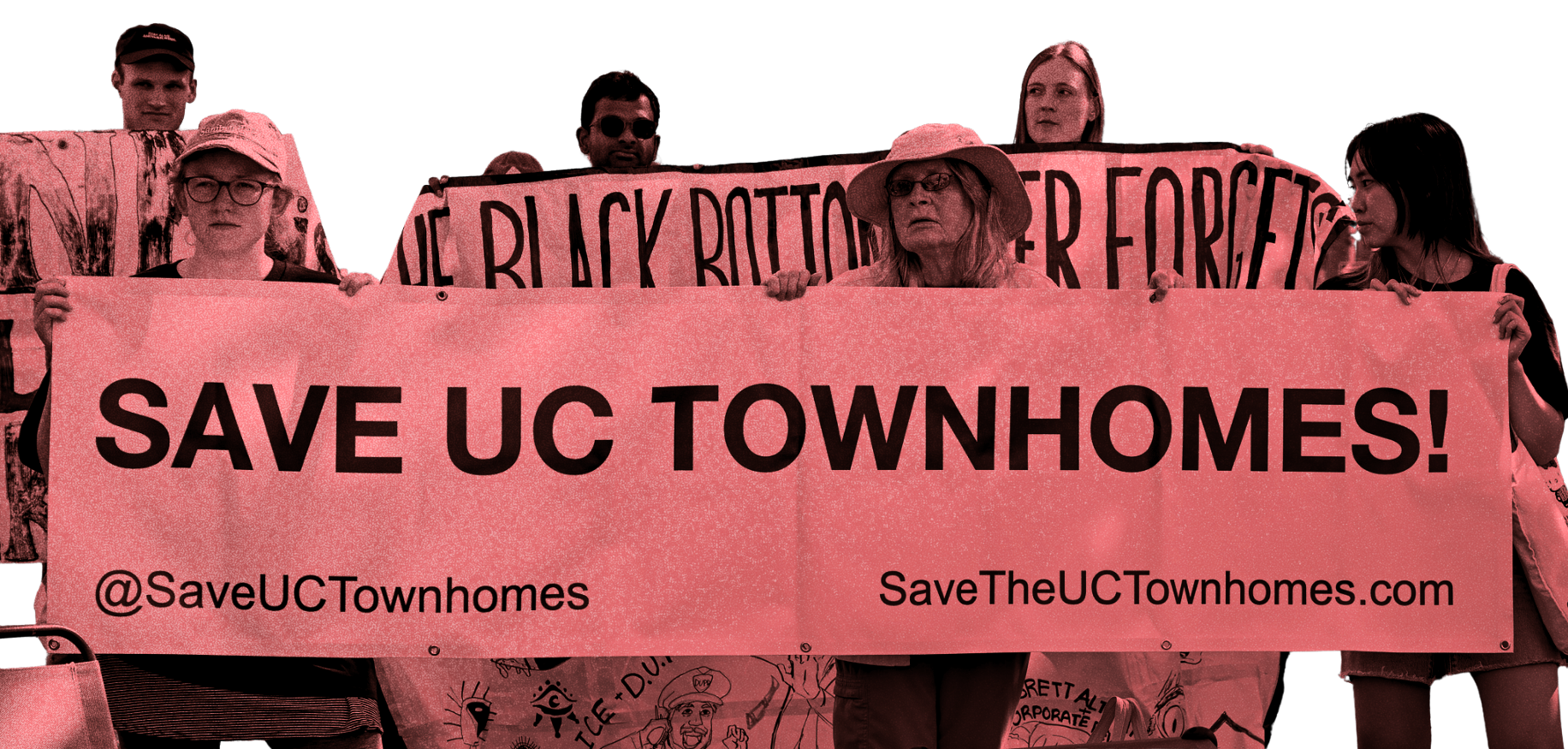
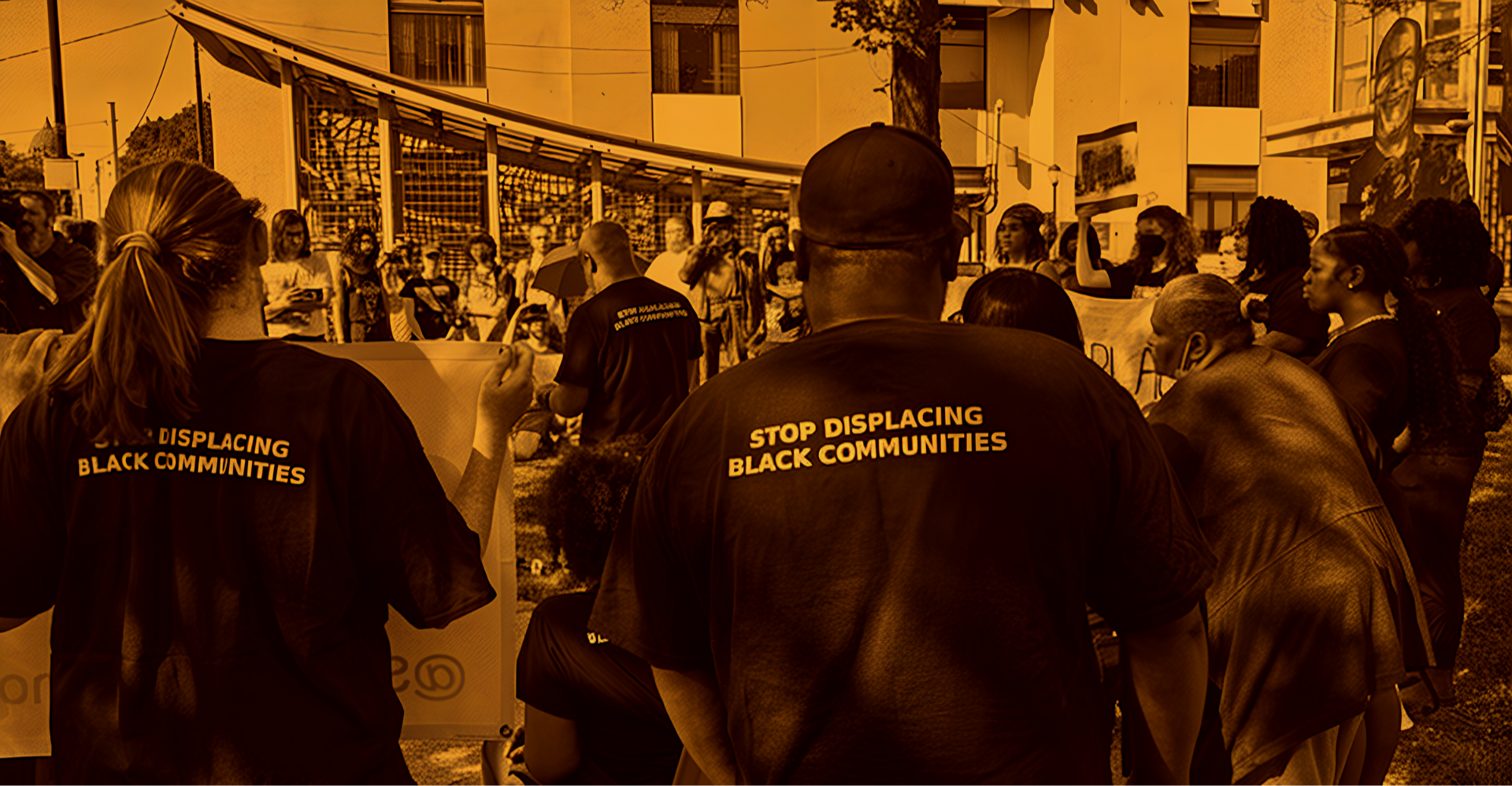
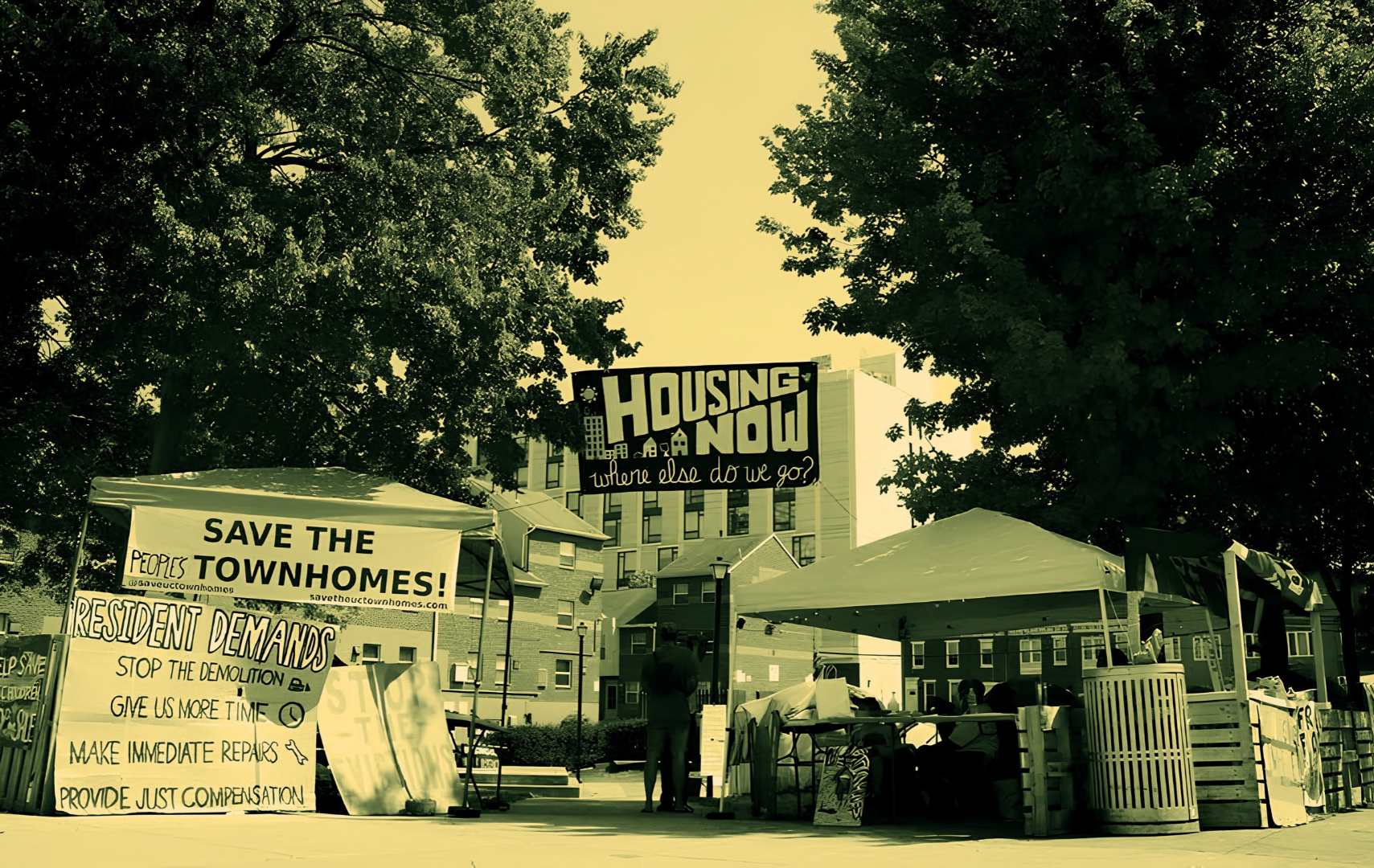
The University City Townhomes were a series of public housing apartments bordered by 39th and 40th, Ludlow and Market Streets. Built in 1983, they included 2.7 acres of housing units. In 2022, the buildings were sold to developers without the consent or inclusion of residents. In protest of this abrupt uprooting, the tenants organized themselves into a Resident’s Council. As a part of the resistance they set up an encampment where supporters could come to join the protest. Unfortunately, the residents were nevertheless displaced. The last tenant moved out in 2023, and the homes were demolished a year later.
We (Drexel students Teagan Hardiman, Shay McNaughton, and Vidhin Shah) spoke with a former resident of the UC townhomes and activist, Sheldon Davids, about his experiences living in the homes and participating in the protests.
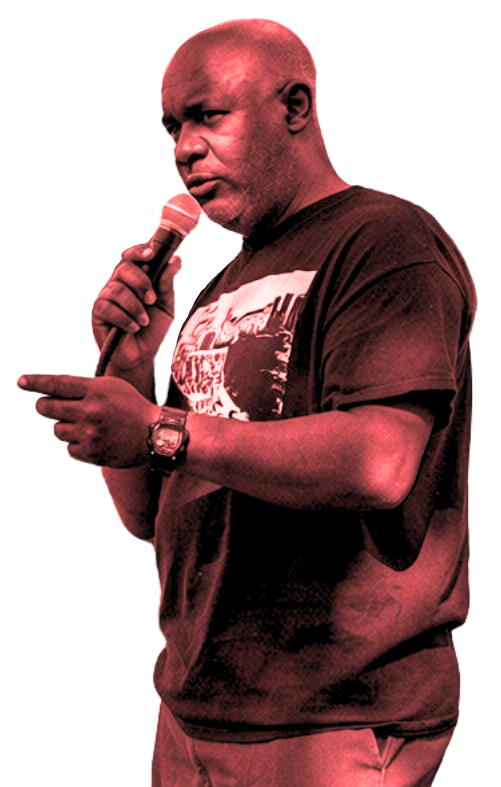
Davids came to the United States from Jamaica in 2009, joining his wife in the Townhomes. He lived in a University City apartment with his wife, her nephew, and his mother-in-law for five years. In 2013, he and his wife moved into a different unit in the Townhomes. During the encampment protests and demolition, Davids participated in resistance to the displacement of his fellow residents as a member of the Resident’s Council. Davids currently works as a library assistant for the Free Library of Philadelphia and in production as a jib operator.
every immigrant’s
story is different
“We were there until we left in 2022,” he tells us. “As you can imagine, it has been an adjustment for all of us,” Davids continues, “but we press on.”
We asked what the UC townhomes represented for him as an immigrant, specifically.
“I can’t say it represented anything for me specifically,” he said. “My own transition was not difficult.”
Due to his previous exposure with the U.S. through travel and American media, Davids was familiar with American society. “Every immigrant’s story is different,” he reminded us. “I came to the community with a basic understanding of how this society works.”
The community was largely made up of racial and ethnic minority groups, including other immigrants. As Davids spoke more of his neighborhood, a picture of the UC homes stretched out before us.
”…kind of a lighthouse”
Ludlow and Market Streets framed the community. Through them ran rows of homes. To the west and east lay two parking lots bordered by speed bumps, an area which earned the name “Play Street,” due to its popularity among children.
Davids’ home, in the complex running up Market Street, was the center of his life and his community. He described the uniqueness of his neighborhood: “I always thought of the townhomes as kind of a lighthouse.” Davids added, “We were a great example... of what a community of affordable housing could look like.”
He spoke of multiple-bedroom apartments, assorted configurations, and ample natural spaces, which are not typically associated with public housing. “It was a mix of concrete and green,” said Davids. He added that the Townhomes were “located in a space that is proximal to the goods and services that allows us to live our lives: transportation, healthcare, the markets, the 40th St. corridor populated with mom and pop stores. Although,” he acknowledged, “that too is changing.”
Davids also described the culture of the townhomes. “There seemed to have been an unspoken understanding that the children and the people of these communities [were] not to be messed with,” he said. “Once that understanding was respected .. folks were free to come and go, strangers traversed uninhibited, unhindered, and nobody was troubled... That kind of openness is kind of remarkable.” He shared memories of playing football (he refuses to call it soccer) with the neighborhood kids, and helping them fix their bikes and pump up their tires. “I refer to the relationship among the kids that came up in the townhomes as being ‘from the sandbox to the graduation gown,’” said Davids.
Asked about his favorite memory from the townhomes, Davids spoke of the community gatherings during students’ prom and high school graduation season: “It was a celebration not only of their graduation, but of the moment that included family and community coming together, and food being cooked, and decorations being put up and pictures being taken… I thought it was such a beautiful phenomenon that it almost brought tears to my eyes.”
“This is my community, welcome to it... I don’t know how to advise you to leave it any better than you found it, but I think I can impress upon you to try your best not to make it any worse.
If you manage to do that, you and I are cool.”
Photo Right: Chris Gelardi for The Nation
“One of the major rubrics…”
Davids spoke to us of his deep appreciation for public transportation. “Transportation is one of the major rubrics by which I judge quality of life,” he said. And the UC Townhomes were in a perfect location–simply hop on a SEPTA train, bus, or trolley, and a resident could get where they wanted to go in a matter of minutes.
We learned how the townhomes’ location was integral for the eventual protests. During the encampment, most trolley lines in the area were closed due to construction. Because of this, commuters using those routes were pulled towards the intersection of 40th and Market to use the working line.
“You would have folks congregating there, [others] would see that something was happening... they would saunter over and speak to folks who were talking, and so a lot of these kinds of organic situations coalesced to grow interest in what was happening, and that interest was shared,” said Davids. The central location helped move news from person to person, spreading the word of what was going on in the neighborhood.
only one voice
We asked what role Davids played in the encampment, and he described his membership in a loose residents council to protest their displacement. “It started out as just gatherings for discussions, and then it evolved into meetings, and then it evolved into a body,” he told us.
Davids was selected to be one of the spokespersons of this body. “I was late to one of the meetings and upon my arrival I was told: You have been nominated ... to speak.” He spoke at several rallies and gatherings, acting as one of the voices for the UC Townhomes. But he acknowledges that his experience was not synonymous with everyone else’s who lived there.
“I am the only voice that you’re hearing from us, which is absolutely not my preference,” he said. As WRIT 290’s project of interviewing continues, we hope that more people in the neighborhood will choose to share their stories with us.
Besides being a voice for his community, Davids played additional roles during the encampment. “I stood sentry during the nights to protect folks,” he said. During the protests, the ‘Save the UC Townhomes’ cause garnered much attention. To ensure community members and protestors could safely go about their day, there was a watch set up to identify possible threats. From midnight until sometimes three or four in the morning, Davids would be on look-out duty.
A “Jamadelphian”
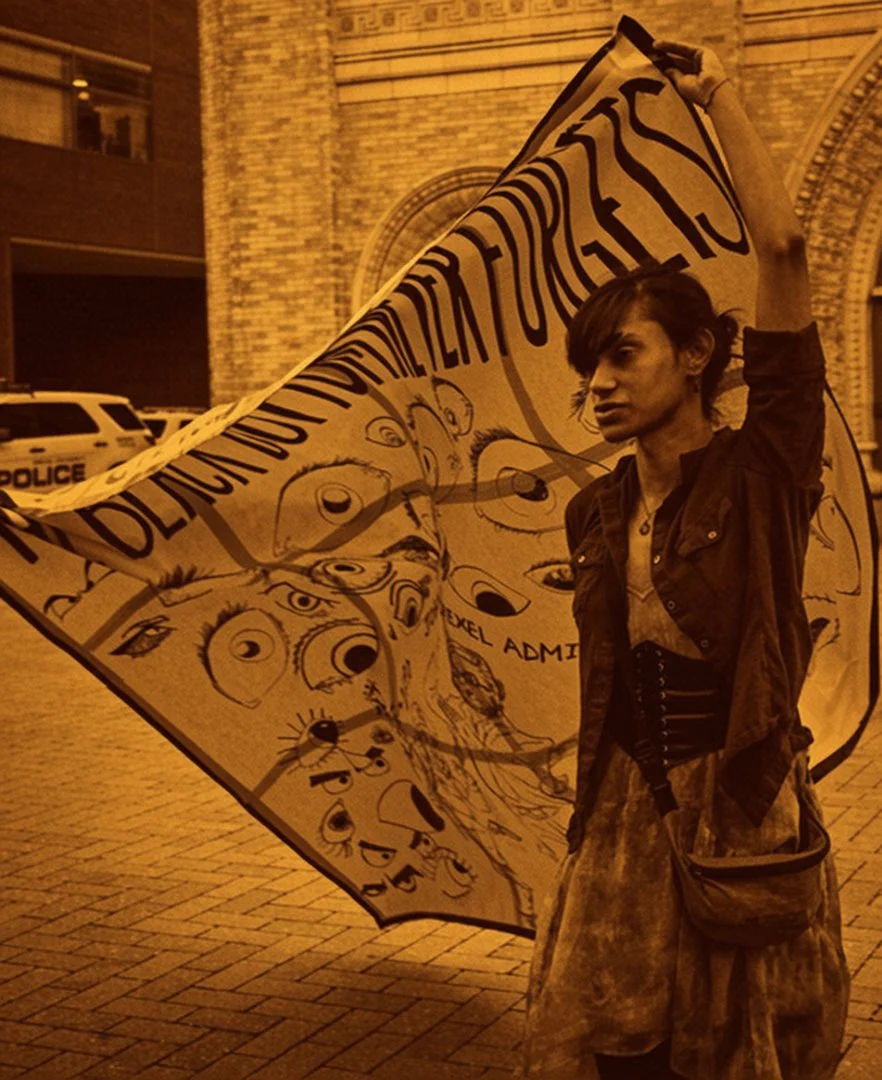
As the nights went on, Davids described how his role turned into more: “I had some conversations with passers-through who came and asked what was going on, and that would evolve into conversations about their own stories. In many instances… those conversations were with complete strangers that I was meeting for the first time... It enhanced my knowledge of the experience of the wider Philly community. And I came away from that experience ... feeling more Philadelphian.” Laughing to himself, he told us that he had made up a name for this role–”a Jamadelphian.”
This experience, he told us, led him to appreciate his community in a way he hadn't before. It drew him deeper into the cause, showing him how valuable the world around him was–and still is. “You’re in the trenches together, whatever that trench might be, it creates a camaraderie just organically that feeds into a community,” he said.
As three interviewers from outside Philadelphia, we wanted to know how Davids felt about being interviewed on this topic, considering we attend one of the institutions that contributed to the destruction of his home. “I have gotten past the novelty and surprise of interest... the townhomes represented an oasis in what has become a desert of affordable housing throughout the city,” he said.
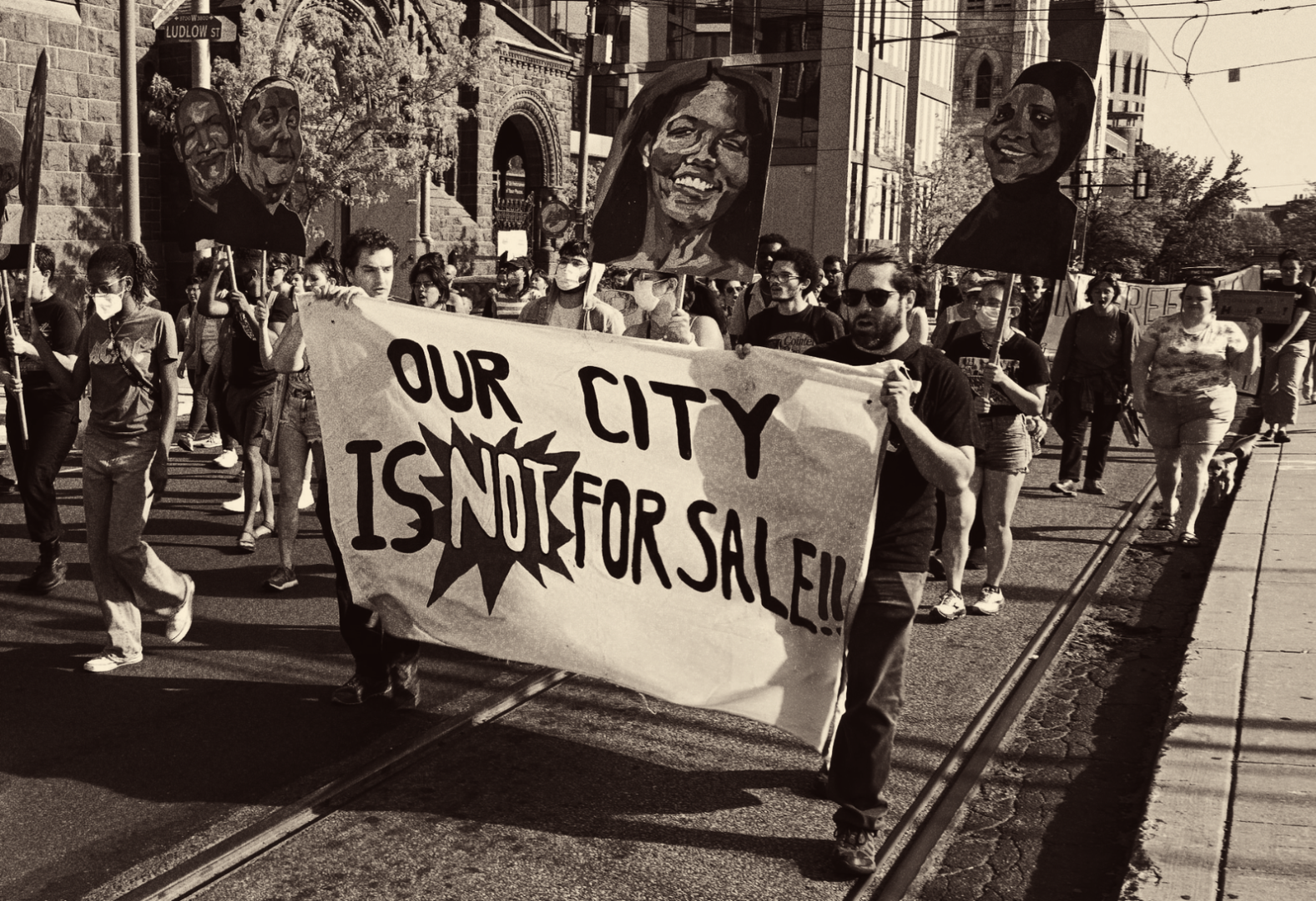
Davids and his fellow community members have come to understand that their past home holds a meaning that is much greater than itself. He acknowledged similarities to the ongoing displacement occurring in Philadelphia’s Chinatown. “Where other campaigns are concerned, most notably Chinatown, there was a cross-pollination,” said Davids, “because a lot of our support came from other movements; No Arena, Philly Thrive, and Spiral Q, to name three that most readily come to mind.” During the recent No Arena movement, he told us several UC residents reciprocated the support they were shown.
“The townhomes represented an oasis in what has become a desert of affordable housing throughout the city.”
Not reversible, but arrestable
We asked Davids what institutions like Drexel University should do to reverse the damage they’d done to the community. “I don’t think [the damage] is reversible,” Davids said. “I think it’s arrestable… The first step has to be to listen to the members of that community, and give what they have to say greater weight than all other stakeholders.” Displacement is the nature of development, Davids acknowledged, but it can be mitigated if community members are consulted in a good faith manner before plans are drawn up. “Begin by recognizing that your ambitions cannot be fully realized if you are going to not harm a community... If you’re considering the welfare of the members of that community you are de-facto considering the environmental impacts of your planning.”
When it comes to the UC Townhomes, Davids said that there shouldn’t have been any displacement at all: “[The townhomes] should have been preserved… I think that it should have been hammered home to the stakeholders how important it was to preserve that space as close to the form that it was as... possible.”
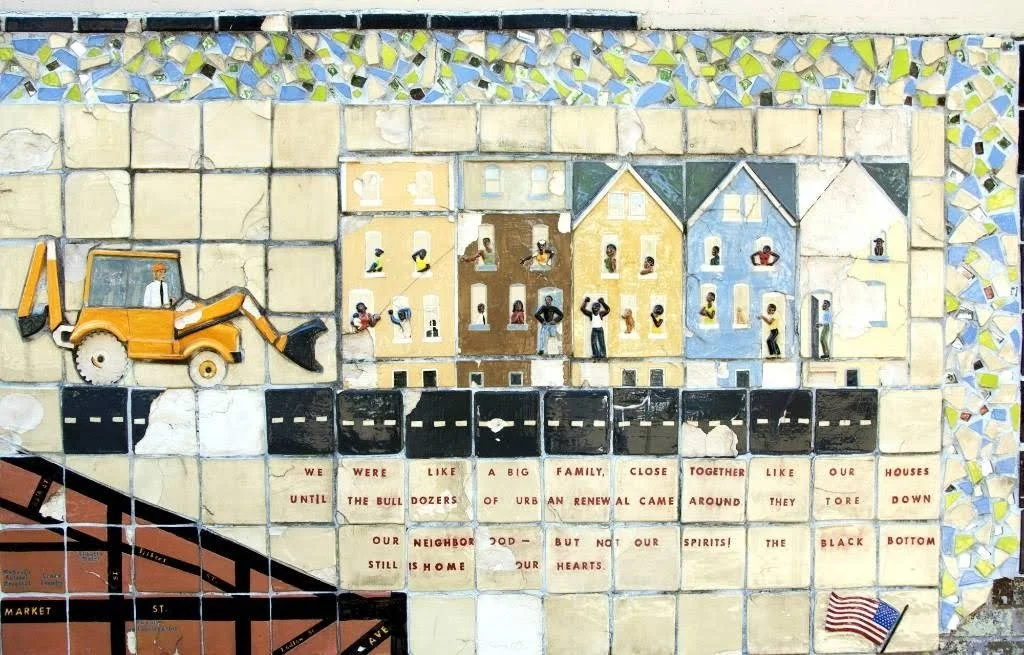
A portion of the Black Bottom Memorial Wall (1999), by artist Andrea Zemel. This mural was a collaborative project with Penn and University City High School students, and was located on the Southeast corner of the high school before it was torn down in 2015.
Davids reminded us that his story hasn’t lost its potency. “Our experience is not unique because gentrification has manifested in so many instances, especially among communities of low-income and affordable housing,” he said. “I have a responsibility to the legacy of this campaign... It has inspired the energy to resist gentrification not just in Philadelphia but wherever else people have taken inspiration from this story and applied it to their own case.”
We thanked Davids for his time, and he left us with a parting message: “This is my community, welcome to it... I don’t know how to advise you to leave it any better than you found it, but I think I can impress upon you to try your best not to make it any worse. If you manage to do that, you and I are cool.”